
Siliguri Town, Siliguri, has three major railway stations, and each one tells a different chapter of its history. Siliguri Town station came first under the British, Siliguri Junction took over after Partition cut the old route to Kolkata, and New Jalpaiguri (NJP) was built in the 1960s for the new broad-gauge line. NJP is even named after a different district, because it was built in Jalpaiguri district rather than Darjeeling.
Siliguri sits at the mouth of the Siliguri Corridor, the narrow strip of land connecting mainland India with the Northeast, and it’s the gateway to Darjeeling, Sikkim, Nepal and Bhutan. Here’s how its stations fit together, how to get around, and what’s nearby.
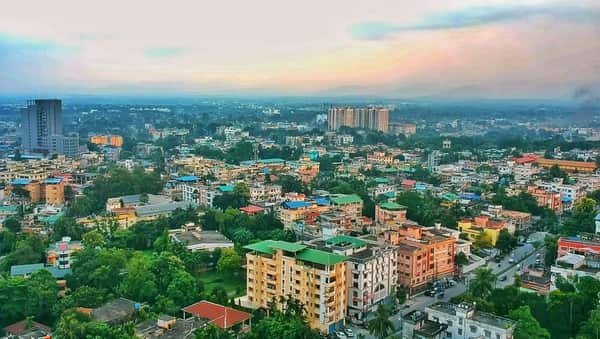
Siliguri at a Glance
| Detail | Information |
| State | West Bengal |
| Districts | Mainly Darjeeling district, with parts in Jalpaiguri district |
| Sub-divisional town since | 1907 |
| Municipal status | 1950 |
| Siliguri Corridor formed | 1947, after Partition |
| Railway stations | Siliguri Town (SGUT), Siliguri Junction (SGUJ), New Jalpaiguri (NJP) |
| Heritage railway | Darjeeling Himalayan Railway (UNESCO World Heritage Site) |
| Airport | Bagdogra |
Three Stations, Three Eras
Siliguri Town (SGUT): The Original
- Opened: Wikipedia gives 1878, while another source says 23 August 1880. The station building itself is described as built in 1880. The 1878 date likely refers to when the railway line reached Siliguri.
- Darjeeling Mail: The famous Siliguri–Kolkata Darjeeling Mail began its journeys here.
- Famous passengers: Rabindranath Tagore, Netaji Subhas Chandra Bose, Mahatma Gandhi, Chittaranjan Das and Jatindranath Mukherjee all passed through. Tagore often arrived here on his way to Mongpu.
- Three gauges: It’s described as possibly the only station in India to have had broad, metre and narrow gauge.
- Restoration: In June 2026, the railways began restoring the neglected heritage building.
- Today: A small, central station with 2 broad-gauge platforms and 1 narrow-gauge platform.
Siliguri Junction (SGUJ): The Partition Station
- Opened:
- Why it was built: Partition in 1947 cut Siliguri Town’s broad-gauge route to Kolkata, which ran through what became East Pakistan. Siliguri Junction became the area’s main station, with three metre-gauge lines.
- Today: 5 broad-gauge platforms and 1 narrow-gauge platform, serving about 50,000 passengers a day. It’s the terminus of the Katihar–Siliguri line.
New Jalpaiguri (NJP): The Main Hub
- Opened: 1960, when a new broad-gauge line linked Siliguri with Kolkata.
- Name: Named after Jalpaiguri district, where it’s located.
- Today: North Bengal’s main railway hub, with 10 platforms (8 broad gauge and 2 narrow gauge) and 45 tracks, on the lines to Howrah, Guwahati and beyond.
The Darjeeling Himalayan Railway
- History: The toy train to Darjeeling began in 1880–81 from Siliguri Town. Sources differ slightly on the year.
- UNESCO status: Inscribed as a World Heritage Site in 1999 as part of the Mountain Railways of India.
- Route:9 km with 17 stations, running today from NJP up to Darjeeling.
- Headquarters:
The Siliguri Corridor
When Bengal was divided in 1947, the region around Siliguri became a narrow land link, often called the “Chicken’s Neck,” connecting the rest of India with the Northeast. Sikkim joined India in 1975. Many migrants settled in Siliguri after Partition, which helped the town grow quickly.
Getting Around Siliguri Town, Siliguri
By Air
Bagdogra Airport is the region’s main airport, with flights across India. It’s so close to the old metre-gauge line that railway enthusiasts note its runway ends almost within Bagdogra station’s limits.
By Rail
- For long-distance trains: Use New Jalpaiguri (NJP).
- For the toy train: Board at NJP for Darjeeling.
- For local trains: Siliguri Junction and Siliguri Town serve routes towards Alipurduar and Assam.
By Road
Buses, shared jeeps and taxis connect Siliguri with Darjeeling, Kalimpong, Gangtok, and the border crossings to Nepal and Bhutan. Autos and e-rickshaws cover short trips around town.
Nearby Areas and Day Trips
- Darjeeling: The famous hill station, reached by road or the toy train.
- Kurseong: The DHR headquarters, a quieter hill town on the way to Darjeeling.
- Mongpu: Where Tagore spent time in the hills, often after arriving at Siliguri Town station.
- Kalimpong and Gangtok: Popular hill destinations, reached by road via the Teesta valley.
- Jalpaiguri: The neighbouring district headquarters, which gave NJP its name.
- Nepal and Bhutan borders: Both are within easy reach, making Siliguri a key trade and travel hub.
FAQs
Q1. What is the difference between Siliguri Town, Siliguri Junction and NJP?
A. Siliguri Town is the original British-era railway station serving the city. Siliguri Junction opened in 1949 following Partition, while New Jalpaiguri (NJP) opened in 1960 and is now the principal hub for long-distance trains serving Siliguri and the surrounding region.
Q2. Why is NJP called New Jalpaiguri if it’s in Siliguri?
A. The station was named New Jalpaiguri because it was built in Jalpaiguri district, south of Siliguri Town station, when the broad-gauge railway network was developed in the region during the 1960s.
Q3. When did Siliguri Town Railway Station open?
A. Sources differ on the exact opening date. Wikipedia lists 1878, while another source gives 23 August 1880. The historic station building dates from around 1880 and is now being restored.
Q4. Where does the Darjeeling toy train start?
A. Today, the Darjeeling Himalayan Railway operates from New Jalpaiguri (NJP) towards Darjeeling. Historically, the railway began its journey from Siliguri Town station when the route was developed in 1880–81.
Q5. What is the Siliguri Corridor?
A. The Siliguri Corridor is a narrow strip of land around Siliguri that connects mainland India with the northeastern states. It took on its present strategic importance following the Partition of India in 1947.